Events & hospitality
Websites for venues, built so an enquiry can actually be answered
Most venues lose people twice — once before they enquire, because there's no price anywhere, and again afterwards, because the enquiry arrived without a date or a headcount so nobody could reply with anything useful. Yours will solve both.
Get my build plan →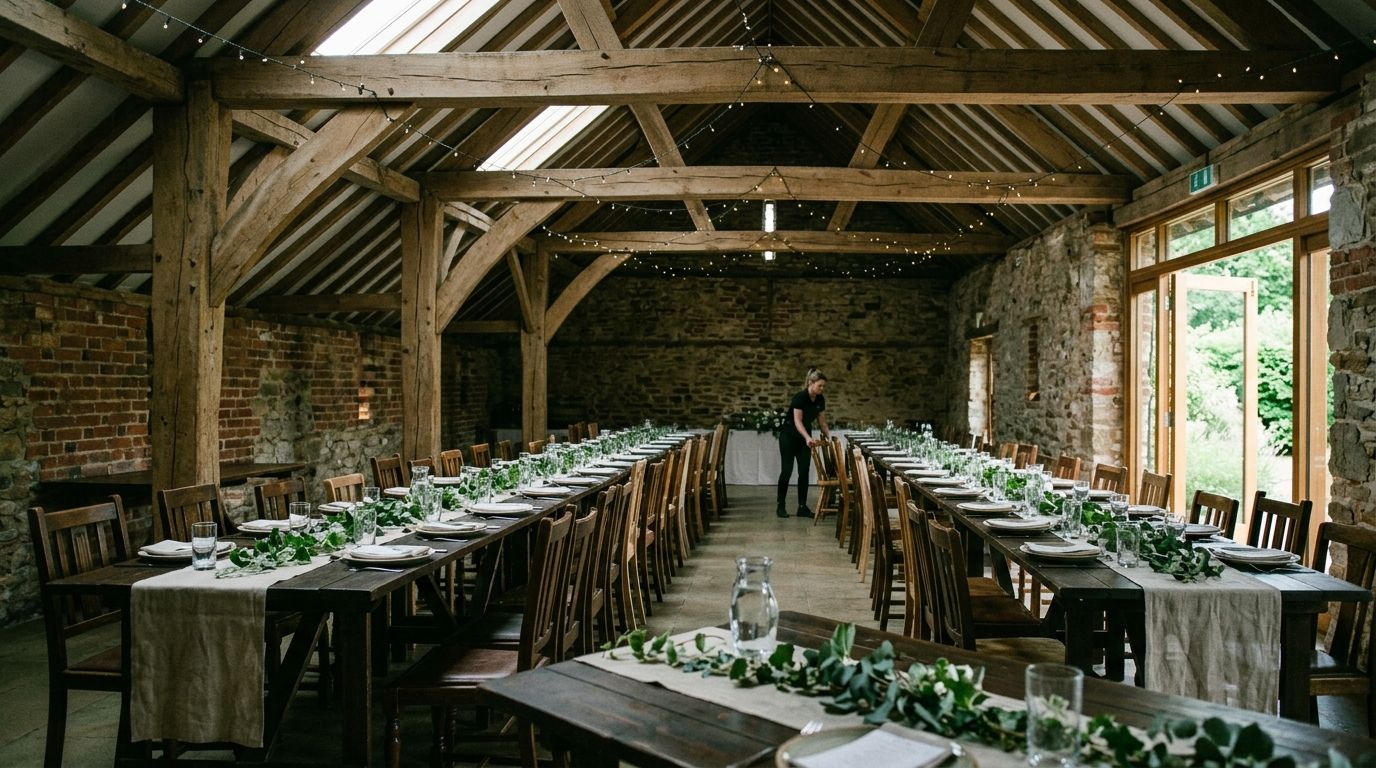
The problem
The ones you never hear from are the bigger loss
An enquiry you answer slowly is a problem you can see. The couple who looked for a price, didn't find one, and closed the tab is a problem you can't — and industry research suggests it's the larger of the two.
- No pricing anywhere. Industry research suggests around a third of couples won't enquire at all if they can't find a price or a guide range. You never learn they were there.
- "Send us a message" and a blank box. No date, no headcount, no budget — so the only honest reply is that someone will be in touch, which is what the other four venues also said.
- They enquired at ten on a Sunday evening. Research puts the median venue response at around eleven hours, so the first reply lands on Monday morning. Most couples book within four weeks of enquiring.
- Photographs but no capacities. A gallery doesn't answer whether a hundred and forty people fit, and that question ends the conversation either way.
- A guide price, published. Not a full tariff — a starting point and a range, by season. It's the single thing that stops people leaving before they arrive.
- Date, headcount and budget on every enquiry, because a reply can't be substantive without all three.
- A real acknowledgement, instantly. Not "thanks" — confirmation of what they asked for and what happens next. It buys you the hours until someone can reply properly.
- Capacities and layouts as facts. Seated, standing, ceremony, by room. Answers the question a gallery can't.
How it plays out
A Sunday, ten in the evening
Five venues, one evening. The one that replies with something wins.
What your enquiry form captures
Three fields decide everything
Date, headcount and budget. Without all three a reply is a holding message; with them it's a quote. Everything else on the form is optional.
The pages
What a venue's site actually needs
Eight pages, and two of them exist purely to stop people leaving.
Connects to
What venues usually wire in
Chosen for this work, not a list of everything we can connect.
Pricing
Published, so you don't have to ask
Studio
A strong, well-built site without bespoke design work.
then £69 per month
- Up to 8 pages
- Enquiry form designed around your business
- Google Business Profile setup
- One revision round
Signature
Where the website is a working part of how the job comes in.
then £89 per month
- Up to 12 pages, including area pages
- The integrations above, wired and tested
- Automated acknowledgement on every enquiry
- Migration with search positions kept
Three standard integrations are included. See what counts as one.
Enquire →Questions
What venues ask us
We don't publish prices. Everyone in the sector says not to.
The sector has said that for years, and industry research now points the other way — around a third of couples won't enquire at all without a visible price or range. You never see those people, which is why it feels like the policy is working. A guide range by season isn't a tariff and doesn't stop you quoting properly. It stops you being eliminated by someone who never told you they were looking.
Won't showing a price attract the wrong enquiries?
It does the opposite. The wrong enquiries are the ones where the budget was never going to work, and at the moment you find that out after the show-round. A range moves that discovery to before the enquiry, which costs you nothing and saves a Saturday morning.
Can the site check dates?
Usually. If your calendar or venue system offers a feed we'll connect it, so a date that's gone says so immediately and offers the nearest available. Where there's no feed we can show blocked periods manually — less good, but far better than nothing.
How fast do we need to reply?
Faster than you do now, and that's an operational question rather than a website one — we can't fix it for you. What the site can do is make the acknowledgement substantive, so it confirms the date and the number and says what happens next. That holds someone's attention for the hours until a person can reply properly.
What about the corporate side?
It's usually the neglected half and often the better margin — midweek, repeat, less emotional. It needs its own page in its own language. Corporate buyers want capacities, AV, parking and a rate; they aren't reading the wedding copy.
How long does it take?
Three phases — Discovery, Build, Launch. Deciding what to publish about price is usually the slow part, and it's the decision that matters most. We agree the timeline at Discovery.
Do we own it?
Yes. The domain is registered in your business's name, not ours, and transfers free on request. If you leave, the site leaves with you.
Also from the studio
Keep looking
Get a build plan for your venue
Five questions and we'll send the pages, what the enquiry form should capture, and a fixed price. No obligation and no call unless you want one.
Get my build plan →Sample site
Wireframe from Discovery, then the finished build
The wireframe is agreed before anything is designed. Press the button to see what it became.A barn and walled garden for 60 to 180
Wireframe agreed at Discovery
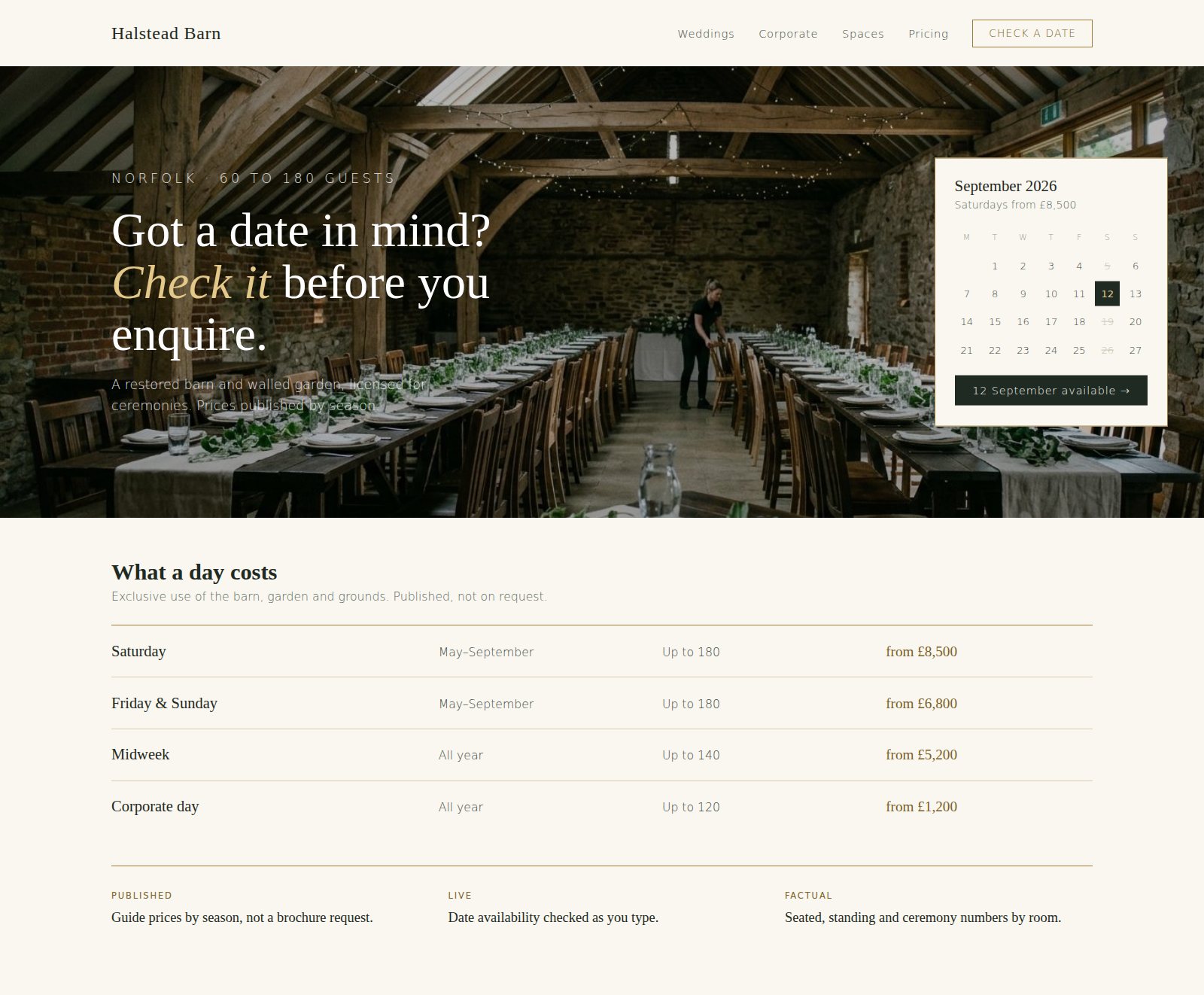
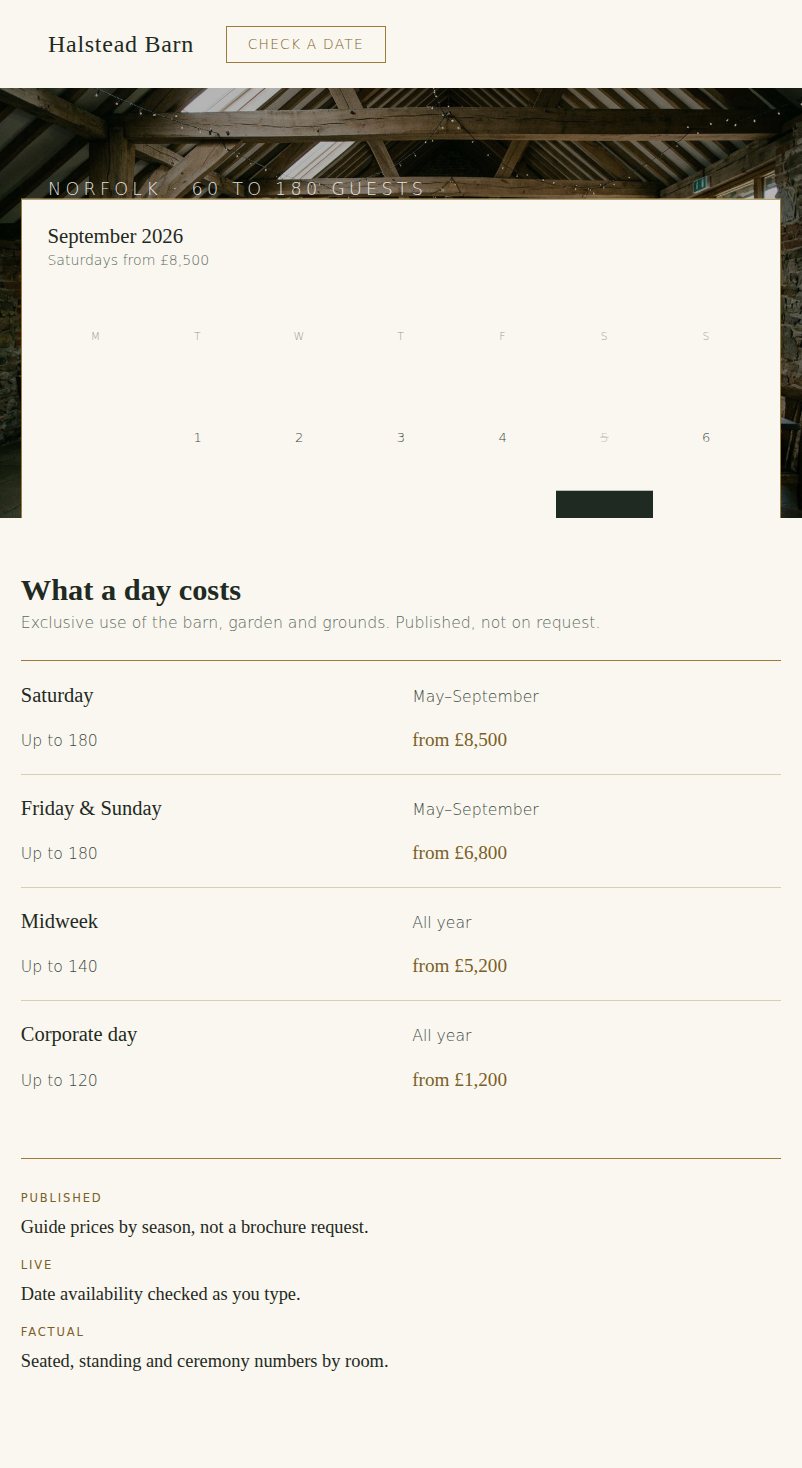
Every build starts from a wireframe you have already agreed. Nothing is designed before that.
Get my build plan →